Students in regional and remote parts of Victoria will soon put new STEM skills into action by building fish traps, making bush soaps, and carving petroglyphs – in the hope they'll consider careers in the field down the track.
The sessions are part of the DeadlyScience STEM learning program, which serves regional and remote communities and will expand into Victoria next year.
A $150,000 grant from the Ross Trust will support the two-year expansion, helping students build skills in prediction, testing, reflection and problem-solving, while encouraging them to dive deeper and consider careers in science, technology, engineering and maths.
Corey Tutt OAM founded DeadlyScience in 2018 as a not-for-profit dedicated to resourcing and teaching regional and remote education providers across Australia and connecting First Nations learners with STEM professionals.
The organisation aims to instil pride in Indigenous children that STEM is part of their culture.
DeadlyScience now plans to deliver its sustained STEM in Schools program in Victoria, providing repeated, curriculum-aligned sessions in up to 300 schools over three years from 2027.
DeadlyScience Government Engagement Manager Cat Williams says facilitator-run sessions – always with one woman and one man – are tailored for students from Prep to Year 10. The sessions are aligned with the Australian Curriculum across Science, Mathematics and Technologies, as well as Aboriginal and Torres Strait Islander histories, cultures and sustainability priorities.
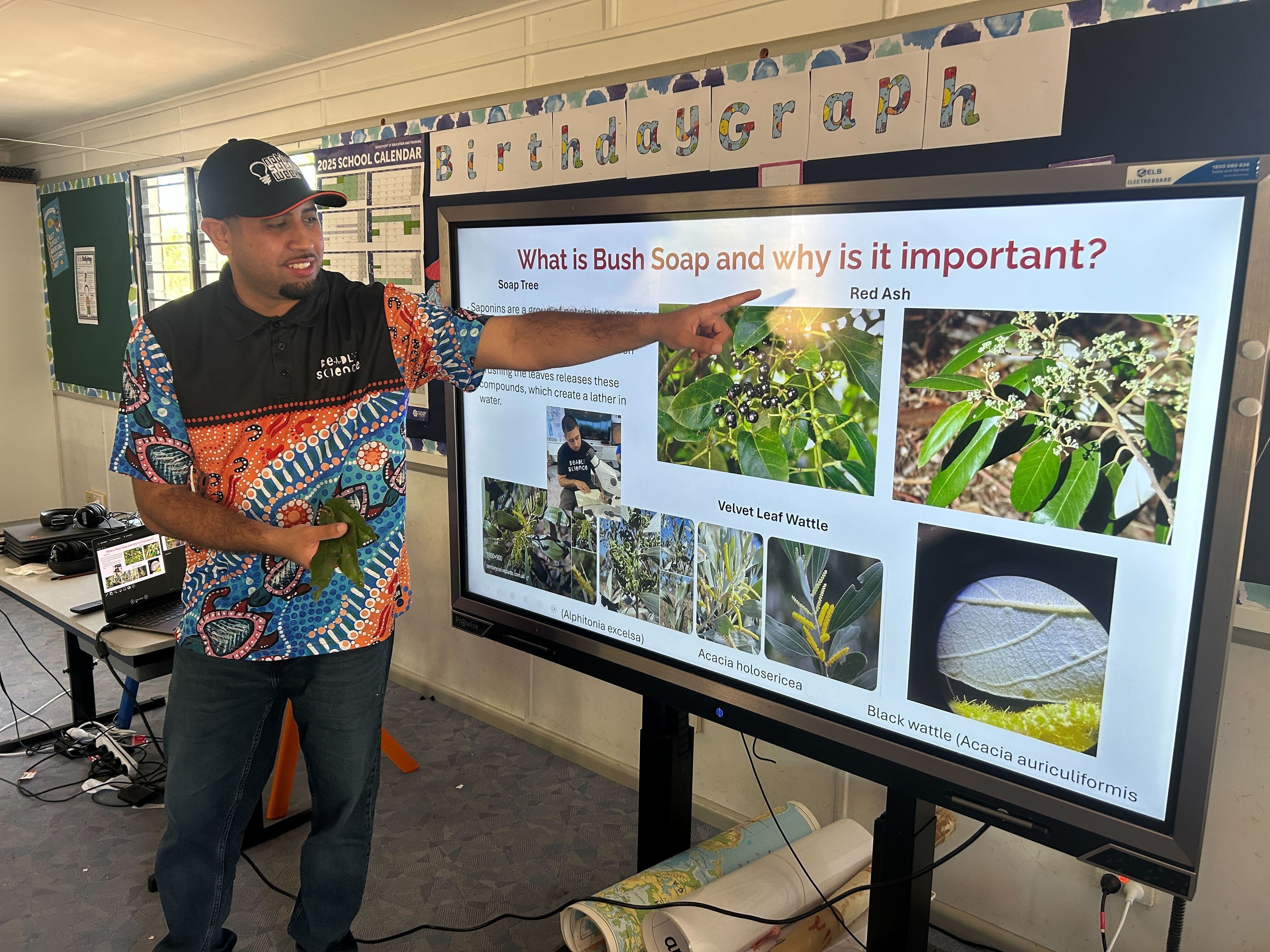
"Sessions are hands-on and inquiry-based and built around topics such as fish traps, petroglyphs (rock art), ochre (natural clay pigment), and bush soaps," Cat says.
"Content and scientific accuracy are developed with First Nations STEM professionals and cultural knowledge holders, meaning the material carries cultural integrity and curriculum weight."
The students are not the only ones who benefit from the sessions.
"Teachers have to be across so many different things, and there can be a hesitation to teach First Nations subjects because they don't want to get it wrong," Cat says. "Our facilitators teach using Indigenous frameworks, and the feedback we received in other parts of Australia show that teachers have increased confidence.
"Victorian schools will receive repeat visits, meaning learning deepens over time and giving teachers the chance to build content into their classroom practice.
"These aren't token visits – we want the schools, teachers and students to connect and remember the facilitators, so they say, 'oh cool, you guys came last time and told us about the traps', for instance."
Running the program isn't cheap, partly because of the travel to regional and remote areas.
"Sometimes facilitators need to catch flights to an area, and then there is the cost of accommodation for several days while they visit up to 10 schools," Cat says. “The funding is so important to help us with those costs.”
Ross Trust Executive Officer Meghan Weekes says the program aligns strongly with the trust's focus on educational equity funding.
"DeadlyScience has a presence in every state and territory except for Victoria," Meghan says. "This funding will mean it can expand culturally responsive STEM learning across regional Victoria and build long-term infrastructure that supports Victorian educators and students."